
A practical guide for homeowners to plan, save, and protect their investment
Buying a home is exciting. For most people, it’s the largest purchase they’ll ever make. But when you signed the papers, did anyone explain what owning it would really cost beyond the mortgage?
The truth is, your mortgage is only part of the picture. Maintenance is inevitable. Houses age, systems wear down, and life happens. The question is whether you’re planning for it or reacting to it.
Maintenance Is Coming Whether You Like It or Not
Every home needs some upkeep, whether it’s a new build, an older house, a condo, or a single-family home.
Think about your own place. How old is your roof, furnace, or water heater? If you’re not sure, you’re not alone, and that’s usually where problems start.
Skipping maintenance turns repairs into emergencies. Emergencies almost always cost more, both in money and stress. Planning ahead helps you avoid surprises and keeps you in control of your budget.

How Much Should You Budget?
A simple rule of thumb: set aside 1–3% of your home’s value each year.
| Home Value | Annual Maintenance Budget (1–3%) |
|---|---|
| $150,000 | $1,500 – $4,500 |
| $250,000 | $2,500 – $7,500 |
Older homes or houses with aging systems usually cost more to maintain. Newer homes might be a little easier on the wallet, but no home is maintenance-free. Spreading out these costs over the year helps you avoid big, unexpected bills.
What That Budget Covers
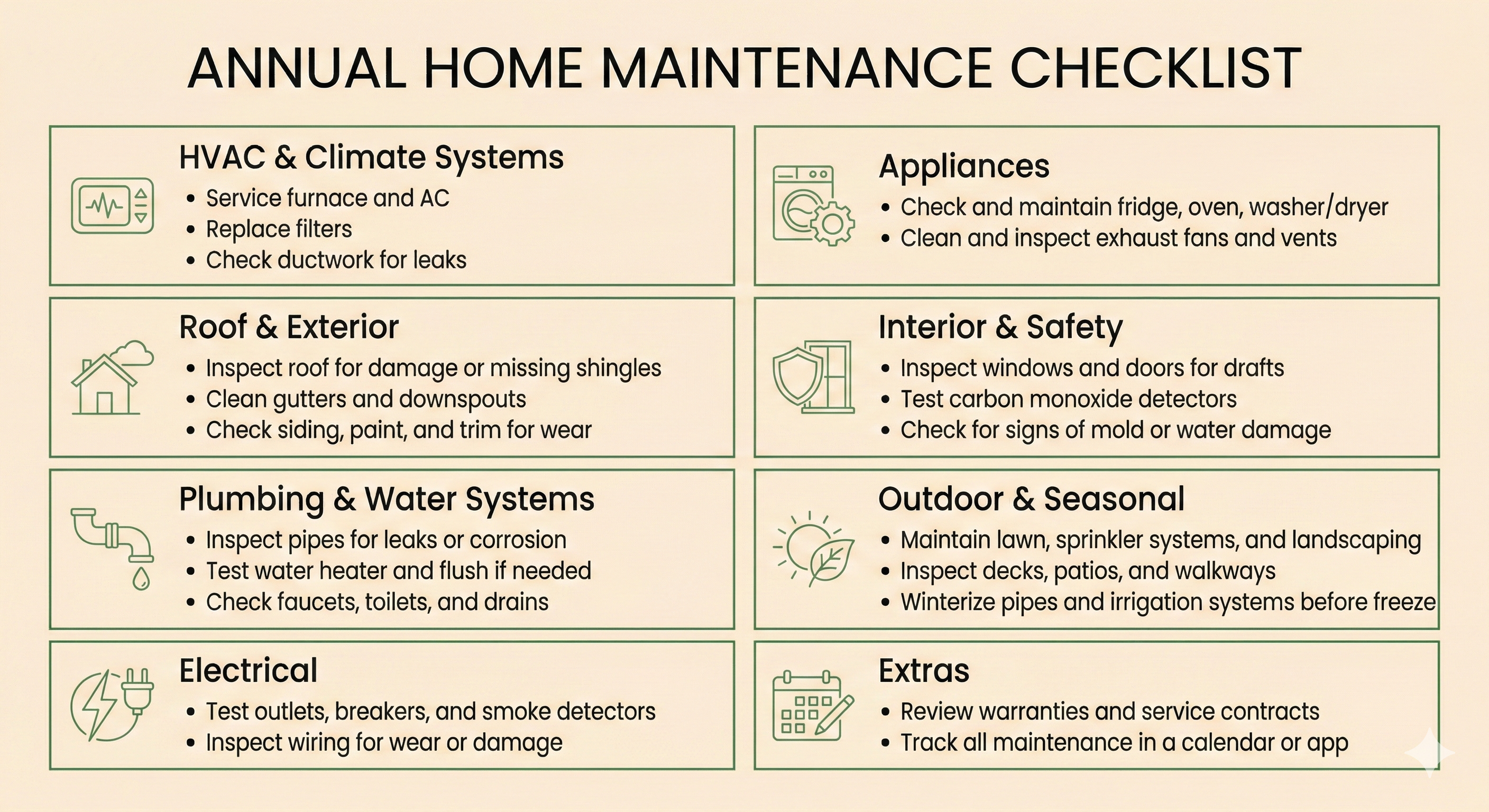
A maintenance budget isn’t just for emergencies. It also handles predictable, recurring costs:
-
HVAC servicing and eventual replacement
-
Roof inspections and minor repairs
-
Plumbing issues like leaks or worn fixtures
-
Electrical repairs
-
Appliance maintenance or replacement
-
Gutter cleaning
-
Exterior upkeep (paint, siding, decks, walkways)
-
Seasonal and lawn care
Ask yourself: which of these would stress you out if it came up unexpectedly? Planning ahead makes them manageable.

Tips for New Homeowners
-
Start a dedicated home fund. Even $50–$100 a month adds up quickly. The key is consistency.
-
Know your home. Learn the age of your roof, furnace, water heater, and major appliances.
-
Stay on top of preventative maintenance. Routine servicing usually costs far less than emergency repairs.
-
Expect the first year to cost more. You’re learning your home and often catching up on deferred maintenance.
-
Plan before things break. If something has five years of life left, consider budgeting for it now rather than scrambling later.
Maintenance Protects Your Investment
Your home is more than where you live. It’s a financial asset.
Deferred maintenance can lower resale value, create bigger problems over time, and make selling harder. Buyers notice. Well-maintained homes sell faster, appraise better, and cost less to own over the long run.
So ask yourself: are you actively protecting your investment, or hoping nothing goes wrong?

Tyrone's Takeaways
Maintenance is part of homeownership. Budgeting for it gives you peace of mind, turns surprises into manageable costs, and keeps you in control. Start a dedicated fund, know your home’s systems, and stay on top of routine upkeep. And when you need guidance or trusted local resources, I’m here to help! 👉 Contact Me