


Rochester homebuyers tend to have more negotiating power when a property has limited competing interest, the price or condition is creating resistance, or if the buyer can offer terms that fit something important to the seller.
Negotiating power does not simply mean getting a discount. It means having enough leverage to influence the purchase price, contract terms, timing, or some combination of them.
That opportunity can exist even when the Rochester real estate market still favors sellers overall. The key is understanding the circumstances surrounding the individual property.
What Is Happening in Rochester Right Now?
Recent conditions are giving buyers more properties worth investigating.
Recent WXXI coverage of Rochester’s housing market described a market that continues to favor sellers while also noting that some homes that previously might have sold within days are now taking weeks or longer.
Our own tracking adds another piece of context. For Monroe County single family homes, the number of active listings we tracked with at least 20 days on the market increased from 273 on October 2 to 359 on October 23, 2026. That is 86 more listings, an increase of about 32% in three weeks.
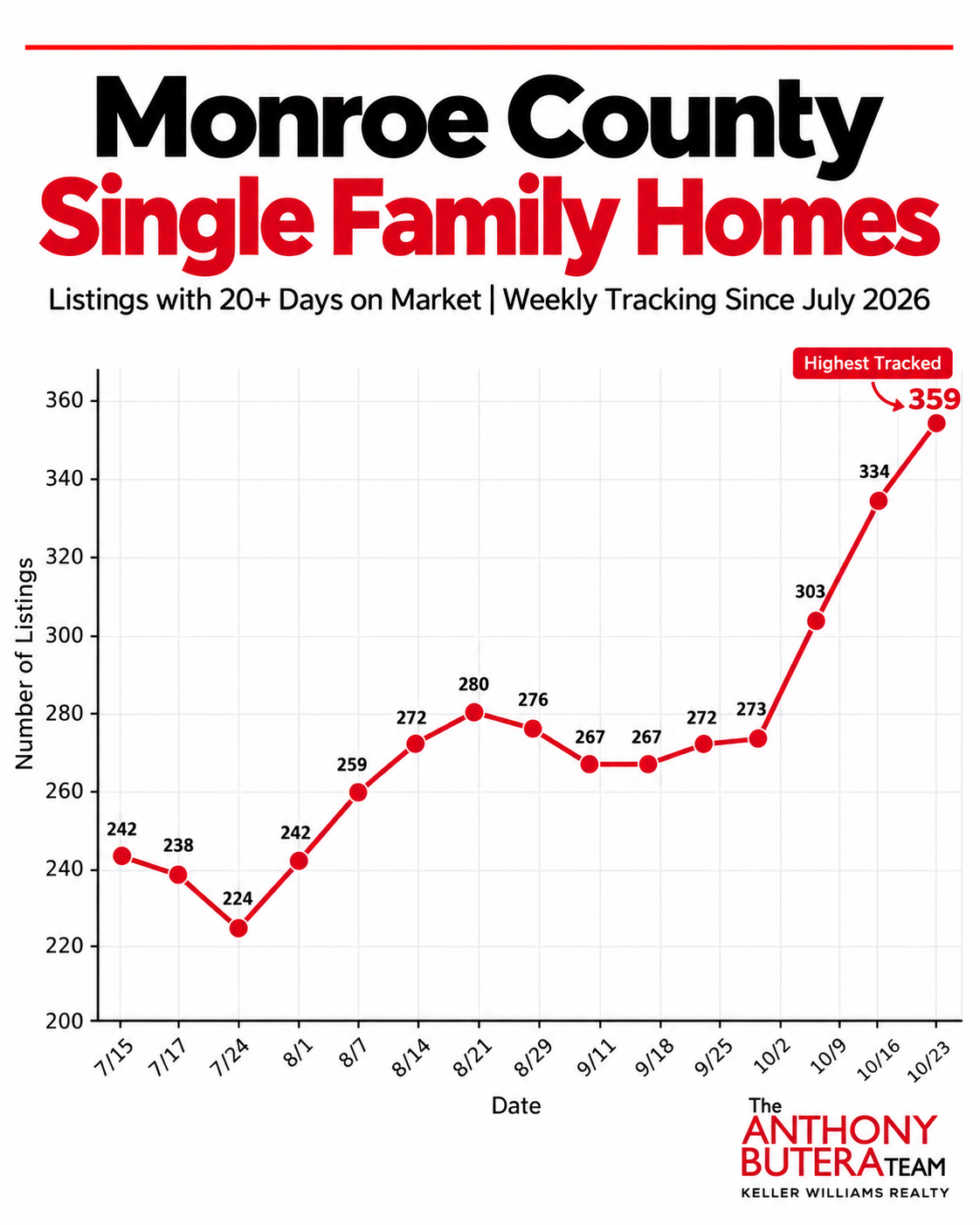
That does not mean homes are taking 32% longer to sell or that those sellers are ready to negotiate. It shows that in October we have seen a noticeable adjustment to the market conditions. During October 2026, our team also saw an uptick with buyers getting offers accepted with more favorable terms.
For buyers, that creates a larger group of properties that could be worth a closer look. This reinforces a point we have been making for several months: buyers can find individual opportunities before Rochester becomes a buyer’s market.
How Can You Tell Whether a Seller Might Negotiate?
There is no single signal that guarantees a seller will negotiate. The goal is to identify circumstances that justify asking better questions.
The Negotiation Date Has Passed, and the Home Is Still Available
Scheduled or delayed negotiations remain common in the Rochester market. If the negotiation date passes and the home remains available, it is worth finding out what happened.
Maybe the seller received offers that did not meet expectations. Maybe interest was lighter than anticipated. Maybe something else changed.
Have your agent confirm the negotiation date, current listing status, and whatever can appropriately be learned about known offer activity or the seller’s position.
Continued availability creates a reason to investigate. It does not prove there were no offers or that the seller will automatically accept less.
Similar Homes Are Selling, but This One Has Not
Days on market matter more when viewed against comparable properties.
A home sitting for 20 or 30 days does not automatically create negotiating leverage. The better question is why similar buyers appear to be choosing other homes. Compare location, price range, condition, features, and listing timing.
Recent closed sales show what buyers have actually paid. Active listings show what alternatives buyers have today. If similar homes continue to attract buyers while one property remains available, that is useful information. However, it may not lead to the appropriate play to be to throw out an arbitrary low offer.
The Seller Has Reduced the Price
A price reduction may signal adjusted expectations. It may also solve the original pricing problem and bring the home into a more competitive range.
Instead of automatically taking another percentage off the new price, evaluate the property where it is today.
Does the revised price line up with comparable sales? How does it compare with competing listings? Has buyer activity changed?
The reduction is information. The current value is what matters.
The Home Needs Work
Condition can create room to negotiate, but buyers should separate cosmetic preferences from meaningful repair costs.
Outdated finishes may affect how much you like a house. An aging roof, mechanical systems, electrical concerns, drainage problems, or significant deferred maintenance can change the financial picture much more. The price may already reflect some of those issues.
That is why inspections, appropriate professional evaluations, and realistic cost estimates matter. A lower purchase price does not automatically make the property affordable if the buyer will immediately inherit significant expenses.
Our guide to planning for an ongoing home maintenance budget can help buyers think beyond the mortgage payment.
Sometimes the better question is not, “How much can I get off the price?” It is, “What will this house realistically cost me to own?”
The Seller Needs a Particular Timeline
Price is not always the seller’s only priority.
A particular closing date or possession arrangement may matter enough that a buyer with genuine flexibility can make an offer more attractive without simply increasing the price.
Ask about priorities that can appropriately be shared rather than speculating about the seller’s personal circumstances. Only offer flexibility you can actually deliver, and make sure agreed timing is documented properly.
These circumstances justify investigation. None guarantees a concession.
What Can You Negotiate Besides the Purchase Price?
Price gets most of the attention, but other terms may matter too.
Closing costs: Seller contributions toward eligible closing expenses.
Repairs: Specific work or another agreed solution between seller and buyer.
Closing and possession: Timing that works for both sides and is clearly documented.
Included items: Appliances or other agreed property that should be specifically identified.
Contingencies and deadlines: Terms that can affect both the offer’s appeal and the buyer’s protections.
Buyers should be careful about treating protections as bargaining chips. Changing an inspection, financing, or other contingency can create real risk. Understand what you are giving up before deciding whether the tradeoff makes sense.
How Much Below Asking Price Should You Offer?
There is no reliable percentage that applies to every Rochester home. Start with three questions.
First, what do recent comparable sales support?
Second, what alternatives and competing interest exist right now?
Third, how does the home’s condition and the other terms of your offer affect the overall proposal?
The asking price is the seller’s position or strategy. It is not an independent measurement of market value.
A home intentionally priced to attract multiple buyers requires a different approach from one positioned above comparable alternatives.
Getting $20,000 below asking does not automatically mean you made a great purchase. Paying asking price does not automatically mean you overpaid.
The better question is whether the agreed price and terms make sense compared with the property’s value, competing options, and your own financial limits.
How Do You Make a Reasonable Offer Stronger?
A thoughtful offer starts before you choose the price.
Review comparable sales and current competition.
Ask about seller priorities and known offer activity.
Identify which requests matter most to you.
Confirm financing and realistic deadlines.
Know what you can accept if the seller counters.
A lower proposed price should have supporting evidence. Any timing flexibility or other term you offer should be something you can realistically deliver.
You may not get a counteroffer or another chance to revise your terms, so knowing your limits before negotiations begin matters.
The goal is not to “win” every part of the negotiation. It is to reach an informed agreement that works for you.
Negotiating Power Is Property-Specific
Rochester buyers do not need to wait for the entire housing market to change before evaluating an individual opportunity.
A home that remains available after negotiations, a price adjustment, meaningful condition concerns, limited competing interest, or a seller priority that fits the buyer’s situation can all create room for a conversation.
None guarantees a discount or concession. They give you information.
Have a home in mind? The Anthony Butera Team can help you review comparable sales, current competition, and the terms that matter to you before deciding how to approach an offer.